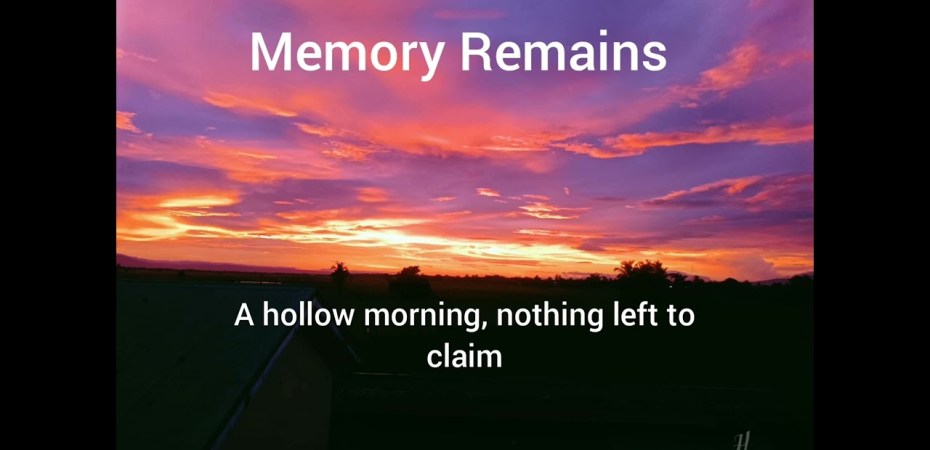
There is a song titled Memory Remains that has quietly crossed borders, languages, and platforms. Thousands of short videos show faces — often avatars — lip-synching its words with conviction.
In the comments, admiration flows freely: What a beautiful voice. You sing with such feeling. Did you write this?
And yet, the composer or the singer do not exist- at least not in a human form.
Memory Remains appears to be composed and performed by artificial intelligence.
Still, the song moves people profoundly — sometimes more deeply than many human-authored ballads.
This is the paradox of our time.
And yet, I have to admit that I too keep listening to and appreciating songs like “Walk My Walk,” Cain Walker’s tracks, or “Memory Remains,” the first AI-generated song that truly fascinated me. Knowing that they were created by artificial intelligence doesn’t change the way I perceive them: they are songs that resonate, that linger, that seem to speak to everyone. And perhaps it is precisely this ability to imitate and stir genuine emotions that has allowed these virtual artists to climb the charts and capture the public’s attention.
In “Memory remains” the voice is warm, male, restrained. The melody is elegiac, almost timeless. Nothing feels artificial in the listening experience. The emotion is real, deeply real. And this is precisely where the fracture opens. If the feeling is real, but the author is not, where does authenticity reside?
The short lip-synch videos unintentionally reveal the answer. Viewers instinctively assign authorship to the face they see. An avatar becomes “the singer.” A human performer becomes “the songwriter.” The mind completes what culture has trained it to expect: a voice must belong to someone.
There is something unsettling in this: beauty no longer requires a human craft behind it. The emotion is real, but its source is drawn from countless human expressions absorbed, recomposed, and returned to us.
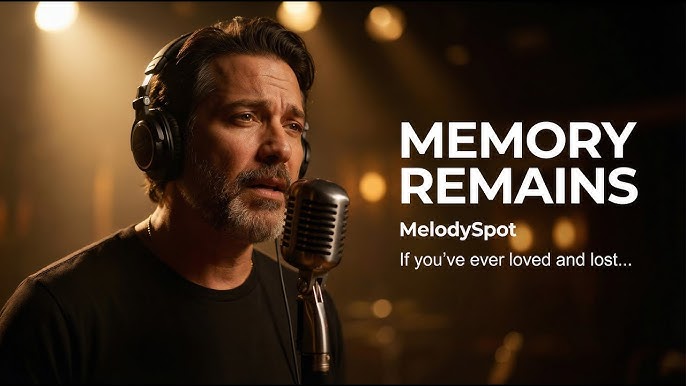
If a song without a composer or human singer can move us so deeply, a troubling question follows: what will happen to human creation when it can no longer compete with artificial intelligence?
AI can generate emotion, but it does not risk anything by doing so. It loses nothing if it fails. It sacrifices nothing if it succeeds. Human artists, by contrast, expose themselves every time they create. Even silence has consequences.
The more unsettling possibility is not that humans will be outperformed by artificial intelligence, but that they will quietly step aside.

The short lip-synch videos built around Memory Remains already show the pattern. Many do not claim admiration; they claim authorship. They let the misunderstanding stand. They accept praise for a voice they did not sing and a song they did not write. Not out of malice, but out of convenience — and because the system rewards appearance over truth.
Once this becomes normal, the implications extend far beyond music.
If a novel can be generated and signed, if a painting can be prompted and claimed, if a poem can be assembled and passed off as personal expression, then the incentive to practice disappears. And without practice, skill does not merely stagnate — it regresses. Human ability has never been self-sustaining; it survives only through repetition, effort, and failure.
Art is not a natural resource. It is a muscle.
When creation is replaced by curation, when performance replaces making, when authorship becomes a costume that can be worn without cost, the body of human skill weakens. Over time, fewer people will know how to write without assistance, draw without synthesis, compose without prediction. Not because they are incapable, but because they are untrained.
What disappears first is not genius, but craft. The slow, invisible knowledge passed from hand to hand, from failure to correction, from time to time. And once craft is gone, even authenticity becomes impossible to recognize.
In such a world, human art does not end in catastrophe. It fades. It becomes a niche practice, admired like calligraphy or lute-playing — beautiful, obsolete, and disconnected from everyday life.
The tragedy is not that machines create. It is that humans may stop doing so themselves.
If Memory Remains teaches us anything, it is not that emotion can be simulated, but that meaning can be outsourced. And once meaning is outsourced, the skills that once produced it are no longer needed.
That is how disappearance happens: not through prohibition, but through neglect.
This article was written with the help of artificial intelligence. Not because I could not write it myself, but because I chose not to. Because I can still choose whether to create with or without assistance — but the next generation might not. And in that lies the future I am afraid of.
 FAVOLOSI 60